The AI Passenger Flow & Service Optimization System is a predictive AI-driven B2B SaaS platform and Edge-AI hardware solution designed to optimise passenger throughput and service efficiency across UK transport hubs through spatiotemporal modelling, real-time causal analytics, and Transit DNA Fingerprinting.
With rail journeys reaching 1.7 billion annually and UK aviation hubs handling over 300 million passengers in 2025, the industry's reliance on reactive, manual monitoring has created a critical "Capacity Gap." Passenger flow management is still dominated by static schedules and "snapshot blindness" costing billions in lost productivity, safety risks, and systemic network drag. AI Passenger Flow & Service Optimization System bridges this gap through predictive throughput intelligence.
The AI Passenger Flow System combines Predictive Flow Intelligence, Real-Time Monitoring, Throughput Delta Diagnostics, Service Enhancement, and Smart Alerting into one unified SaaS platform no-code, real-time, and data-driven for UK transport hubs.

Anticipate passenger movement and congestion before it happens with our proprietary Arrival-to-Throughput engine and Transit DNA Fingerprinting.
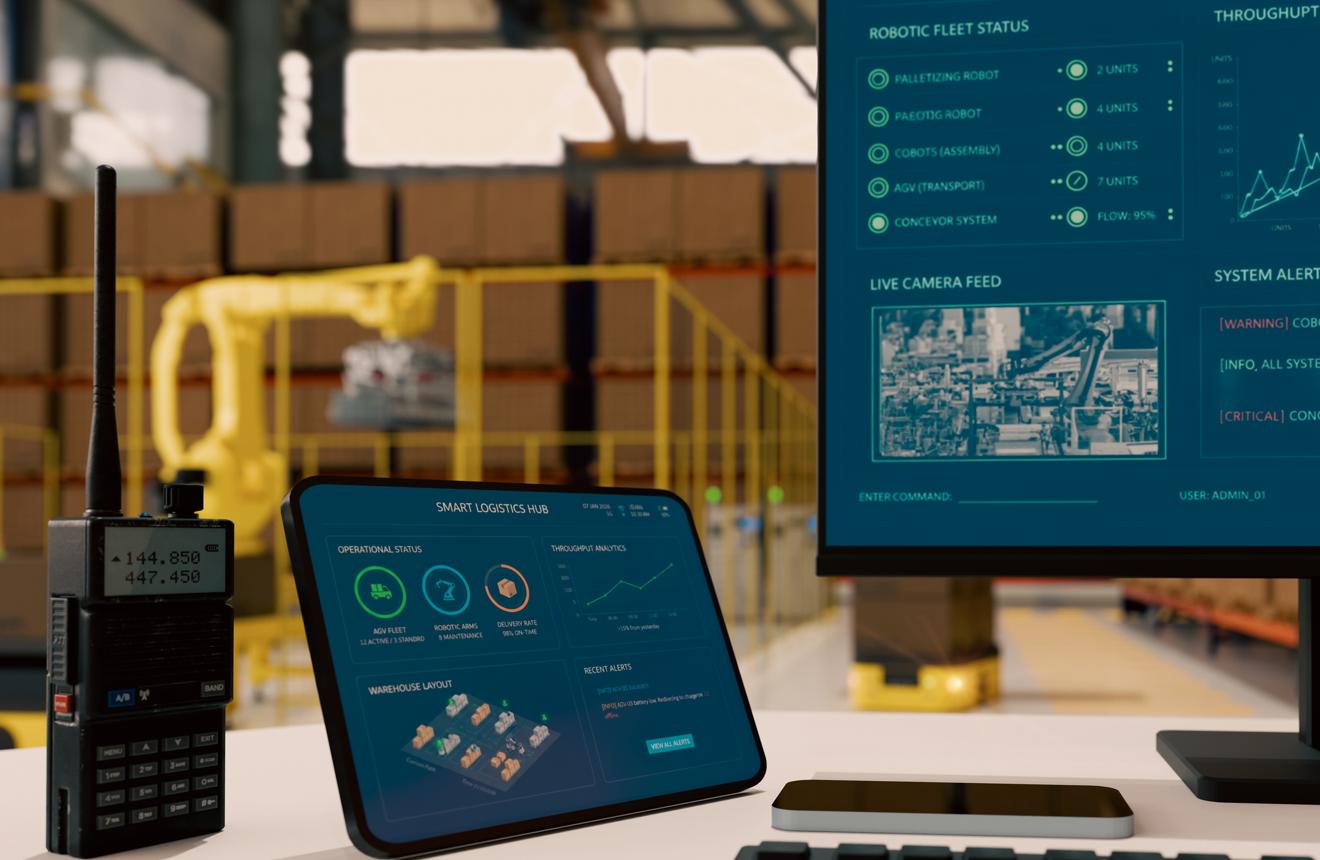
Track real-time passenger density across all zones and facilities with edge-AI vision nodes delivering low-latency spatial intelligence.
Automatically diagnose root causes of premature congestion by analysing the delta between expected throughput and actual passenger-flow velocity.
Captures proprietary "Transit DNA" lost to staff turnover and institutional "brain drain." When a senior station manager departs, their crowd-management logic stays permanently encoded in the platform.
Automates congestion detection while maintaining a human oversight layer for complex security exceptions fully satisfying UK ORR and CAA 2025 governance requirements.
Sits above any existing hardware (CCTV, ticketing gates, station ERPs) operators are never locked into a single equipment manufacturer. Plug-and-play API connectivity reduces onboarding from weeks to days.
The FMLN enables anonymised "Transit DNA" benchmarks to improve predictive models across all UK hubs without sharing sensitive commercial data creating a collective intelligence ecosystem.
Generates CFO-ready reports showing how compiled "Flow Logic" reduces carbon footprints by minimising dwell times fully aligned with UK Net Zero 2050 targets and 2025 ORR safety standards.
Tiered SaaS from £100/month giving regional UK transport hubs enterprise-level FlowOps intelligence without the cost of dedicated engineering teams or generic high-cost consultancy.
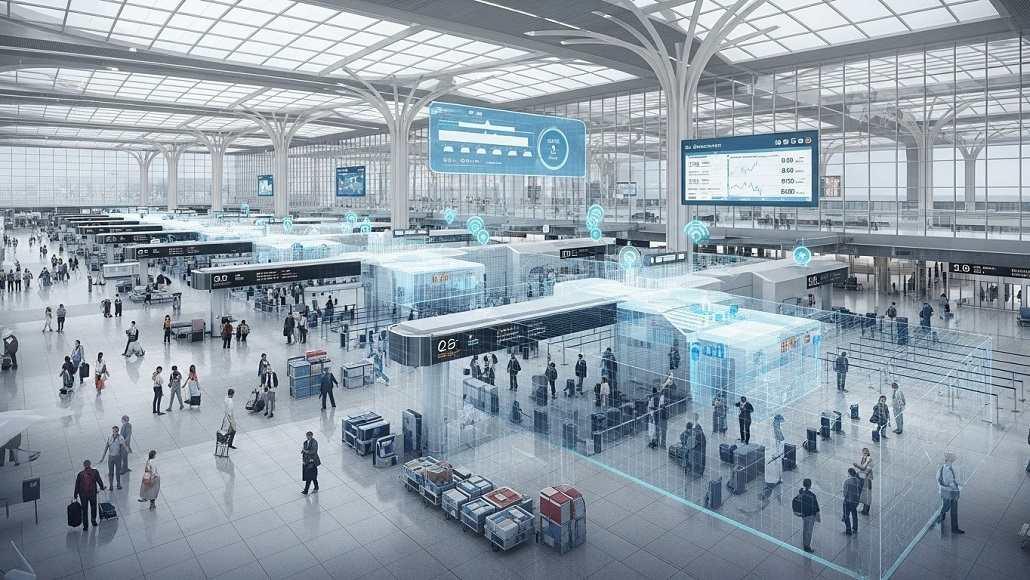
The AI Passenger Flow & Service Optimization System is a UK-based SaaS venture founded by Hardip Kaur combining an MSc in International Business from the University of Bedfordshire with extensive operational experience supervising high-footfall environments to solve the most pressing challenge facing UK transport today: the "Capacity Gap" that costs the sector billions in lost productivity, safety risks, and systemic congestion.
We aspire to be the global standard for "FlowOps," fostering a future in which transport infrastructure is automatically synchronised with real-time passenger behaviour, ensuring seamless travel experiences and zero-gap safety governance across every hub in the network.
To empower UK transport operators to transition from "reactive monitoring" to "predictive throughput optimisation" by leveraging an AI-driven mobility layer that eliminates the capacity gap and safeguards institutional operational memory against staff turnover and brain drain.
Continuous refinement of spatiotemporal flow models to stay ahead of the global velocity of urban mobility and smart city trends across the UK's expanding transport network.
A commitment to movement-data integrity and the elimination of "snapshot blindness" in terminal flow mapping 96% pre-congestion detection accuracy in live UK deployments.
Empowering transport operators to own their operational mobility logic as a proprietary and permanent business asset not lost when experienced managers depart.
Making complex passenger journeys manageable through machine-executable routing pathways and low-friction Edge-AI retrofit integrations that work with existing infrastructure.
Equipping station managers and infrastructure directors with the automated foresight needed to scale hub capacity without headcount-proportional safety risks.
Reducing UK transport congestion energy waste by 20–30% per hub through precise Transit DNA optimisation aligned with Net Zero 2050 targets and ORR compliance frameworks.
Hardip Kaur possesses a unique combination of advanced business leadership and high-stakes operational management experience creating a powerful "founder–problem–market fit" to lead the AI Passenger Flow & Service Optimization System in the UK. Her background bridges strategic international business scaling with the rigorous organisational oversight required for transport infrastructure.
With an MSc in International Business from the University of Bedfordshire and extensive domain authority in supervising high-footfall environments, Hardip leads the conceptual development of the "Transit DNA Fingerprinting" engine and the "FlowOps" layer converting raw spatial signals into actionable mobility logic.
Hardip unifies the worlds of International Business Strategy and High-Footfall Operations equipping the platform with a hands-on understanding of how to link technical infrastructure metrics (like gate cycles) to human outcomes (like crowd clearance), which general-purpose sensor platforms cannot replicate.
The AI Passenger Flow & Service Optimization System combines spatiotemporal modelling, multi-mode execution, and failure diagnostics into a single SaaS platform purpose-built for the UK's mid-market regional transport hubs.
Uses machine learning to identify and "fingerprint" the mobility patterns of successful passenger journeys allowing for benchmarking and cloning of optimal routing logic across diverse transport hubs.
Track real-time passenger density across zones and facilities with proprietary Edge-AI Mobility Logic Nodes retrofit sensors for secure, real-time spatial data capture.
Automatically diagnose root causes of premature congestion by analysing the delta between expected throughput and actual passenger-flow velocity with 70% reduction in manual monitoring time.
Automatically deconstructing a single mobility signal into a complex, multi-step operational workflow removing the need for manual staff-to-data translation of crowd safety needs.
Receive instant alerts and actionable insights for proactive decisions powered by an Outcome-Learning system that maps successful interventions to real-world margin protection.
Virtually test the impact of a proposed operational change against historical flow data predicting congestion risks before real-world implementation.
| Feature / Capability | Legacy Compliance (Tracsis/SITA) | Niche Vision (Vivacity) | Binary Sensors | Manual Logs | AI Passenger Flow System |
|---|---|---|---|---|---|
| Arrival-to-Throughput Lifecycle | No (Manual entry) | No (Spatial only) | Limited (Occupancy) | No | ✓ Automated signal-to-action |
| Spatial-Causal AI Synthesis | No | Limited (Heatmaps) | No | No | ✓ Proprietary PFO mapping |
| UK-Specific Infrastructure Benchmarks | No (Global templates) | Mode-centric only | No | Limited | ✓ DfT & ORR Logic trained |
| Transit DNA & Signal Mapping | Limited (Schedules) | Density only | No | No | ✓ Movement intent tracking |
| Outcome-Learning Mobility Memory | No | No | No | No | ✓ Incident-to-match learning |
| Federated Mobility Network (FMLN) | No | No | No | No | ✓ Anonymous sector benchmarks |
| Cost Structure | High CapEx / Licensing | Sensor-based high fee | Tool-based | Time-intensive | SaaS from £100/mo |
The global AI-driven passenger flow management market was estimated at USD 8.4 billion in 2024, projected to reach USD 10.1 billion in 2025 with a CAGR of 19.4% through 2034. The UK's mid-market regional hubs represent the largest untapped opportunity currently underserved by generic enterprise consultancy.
Serviceable addressable market mid-market focus
% of directors reporting these as critical operational challenges
AI Passenger Flow System vs legacy market alternatives
Global AI passenger flow market (USD B) & UK AI adoption rate
London alone represents over 30% of all UK rail and airport passenger revenue. The value of "Mobility Equity" per terminal zone is estimated 40% higher in London making it the ideal launch territory with highest financial return.
Manchester and Birmingham are among the fastest-growing transport hubs in the UK, driven by rapid urbanisation and HS2-linked developments primary targets as agile operators rely on automated systems but lack enterprise-grade engineering teams.
80% of effective AI adoption occurs in "Big Six" global airports with dedicated R&D budgets. Only 14% of mid-market regional hubs have moved beyond manual monitoring this is the "Mobility Capital" concentration AI Passenger Flow addresses.
From inbound arrival signals to automated routing outcomes the AI Passenger Flow System establishes a continuous intelligence lifecycle that links ticketing gate diagnostics, real-time zone-level behavioural signals, and automated resource or routing outcomes in one unified operational platform.
The platform ingests ticketing gate diagnostics, CCTV spatial signals, and mobile data into a single "Institutional Mobility Memory" converting fragmented data into structured Movement Objects via the proprietary Passenger Flow Ontology (PFO).
The Custom Causal Flow Classifier and Spatial Signal Forensics Engine identifies the specific "Transit DNA" of each hub cumulative dwell time, gate sensitivity, recovery lag and fingerprints friction points with 96% pre-congestion detection accuracy.
The TDD engine analyses the delta between the hub's expected throughput and actual passenger-flow velocity automatically generating Congestion Risk Reports and routing interventions before a spatial break becomes a safety or financial loss.
A single mobility signal (train delay, arrival surge) is automatically deconstructed into a complex, multi-step operational workflow removing manual staff-to-data translation. The platform delivered a 32% average increase in passenger clearance speed across 8 UK transport locations.
Subscription pricing designed to scale alongside the operator's passenger volume from basic density tracking to full-spectrum, machine-executable Arrival-to-Throughput flow logic. All plans include UK GDPR compliance and ORR audit-ready reporting.
One-off technical integration and gate calibration fee. Our team installs Mobility Logic Nodes and configures CCTV/ticketing API connectors specific to your hub layout.
Specialised multi-mode flow baseline validation. A deep-dive analysis of your hub's existing movement patterns to establish a proprietary Transit DNA baseline for ongoing optimisation.
Advanced network benchmarking and "Mobility Equity" growth insights. CFO-ready annual reports linking Flow Logic to carbon reduction, safety improvements, and operational margin protection.
Comprehensive operational mobility data audit for multi-site transport networks or regional rail groups providing strategic tools for infrastructure scaling, safety protection, and ORR compliance.
Talk to our team about deploying the AI Passenger Flow & Service Optimization System in your transport hub. We work with regional rail stations, metropolitan metro systems, and airport terminals across the UK.
Whether you're a regional rail operator struggling with peak-hour congestion, a metro system seeking to preserve institutional "Mobility Memory," or an airport terminal targeting ORR compliance, our team is ready to help.